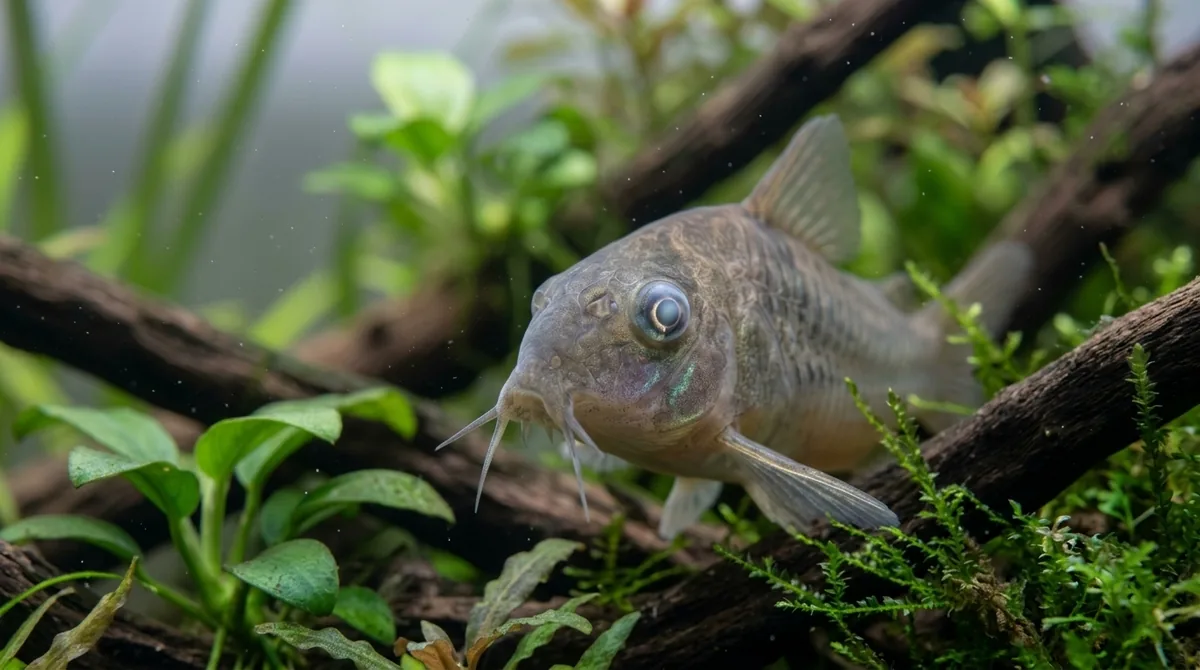
Cloudy Eyes
in Fish
One eye or both changes what you're looking at.
A fish's eye turning hazy, white, or faintly blue over its surface is unsettling to notice, and easy to miss until it's already obvious. It can look like a fogged-over lens on an otherwise normal-looking fish.
This guide explains the difference between one eye and both, the handful of causes that produce this look, and why the aligned response depends entirely on which one you're actually seeing.
One eye, or both —
that's the first thing to check.
Cloudy eye is exactly what it sounds like. The surface of the eye develops a hazy, white, or bluish film, sometimes described as a fogged lens. It can affect one eye or both, and that difference is the single most useful thing to notice first.
A cloudy eye on its own doesn't say much yet. It's a description of what you're seeing, not a diagnosis of why it's happening. The cause behind it changes what response actually helps.
Some fish also carry a naturally translucent or slightly hazy-looking eye as part of their normal appearance — certain telescope-eye goldfish varieties, for instance. Knowing what's typical for your specific fish matters before treating any change as new.
Look at the unaffected eye first, then the cloudy one, under the same light. A genuine change stands out clearly next to a normal eye on the same fish. That comparison is more reliable than trying to remember what the eye looked like last week.
Four different things
can produce the same look.
Physical injury. A scratch or bump against decor, substrate, or another fish can cloud a single eye. This is the most common cause of one-eye cloudiness, and it's mechanical, not infectious. It shows up right after the incident, if you happened to see it.
Water quality irritation. Ammonia, nitrite, or a sudden pH swing can irritate the surface of both eyes at once, the same way these compounds irritate skin and gills elsewhere on the fish. This version tends to affect both eyes evenly rather than just one.
Bacterial or parasitic infection. Some infections cause genuine cloudy eye disease, usually alongside other symptoms — clamped fins, reduced appetite, or reddened patches near the eye. This is the version that needs targeted treatment, not just time.
Natural or breed trait. Certain fish, including some older individuals and some fancy varieties, naturally carry a permanently hazy or filmy-looking eye. If it's been that way for a long time and nothing else has changed, it's likely just how that fish looks.
"A cloudy eye is a symptom, not a diagnosis. The same haze can mean a healed scratch or an infection that needs medication — which is exactly why it's worth slowing down before treating it."
What else is happening
tells you more than the eye alone.
Start with the count: one eye or both? One eye, especially with no other symptoms, points toward physical injury. Both eyes together points toward water quality or, less often, a systemic infection.
Check for other symptoms next. Clamped fins, reduced appetite, unusual hiding, or reddened skin near the eye all suggest something more than a simple scratch. A cloudy eye with no other changes at all is the mildest version of this signal.
Test ammonia, nitrite, and pH regardless of what else you see. Water quality is one of the most common drivers of both-eye cloudiness, and it's also the fastest thing to confirm or rule out.
A minor scratch-related cloudiness in one eye often improves within a week or two on its own, especially once water quality is confirmed clean. Watching for a few days before treating anything is rarely the wrong call.
Match the treatment
to which of the four it is.
If it's one eye with no other symptoms and water tests clean, the aligned response is simply to keep the water quality high and wait. Physical injuries to the eye usually heal on their own within one to two weeks.
If it's both eyes and water tests show elevated ammonia, nitrite, or an unstable pH, correct those parameters first. The cloudiness typically clears as a side effect of fixing the water, not as something you treat directly.
If other symptoms are present alongside the cloudiness — clamped fins, appetite loss, redness — treat for a bacterial infection specifically, and consider separating the fish while it recovers. This is the one version where waiting it out isn't the right call.
"The eye was never asking to be treated on its own. It was asking you to look at what else was going on around it."